Ottantaquattresima guida operativa Odoo 19 per PMI italiane. Undicesima della serie di 15 guide sul CRM Odoo. Quando la forza vendita supera i 5-7 venditori, l’impostazione “tutti vedono tutto” diventa caotica: lead persi, opportunità duplicate, conflitti su chi segue il cliente, nessuna specializzazione. La risposta è un’organizzazione su più team, specializzati per area geografica, segmento di clientela o prodotto, ciascuno con il proprio cruscotto, i propri KPI (indicatori di prestazione) e la propria autonomia. In questa guida vediamo come impostarla nel CRM Odoo.
Vediamo: impostazione dei team, criteri di segmentazione, permessi e visibilità, gestione dei territori, smistamento dei lead tra team, KPI per team ed esempi illustrativi per PMI italiane.
Quando servono più team
I segnali
- Forza vendita oltre 5-7 persone
- Più aree geografiche servite
- Più segmenti di clientela
- Più linee di prodotto
- Cicli di vendita diversi per segmento
I benefici
- Specializzazione approfondita per area
- Responsabilità chiare sui clienti
- Affiancamento specifico per team
- KPI attribuibili a ciascun team
- Percorsi di crescita per i venditori
Impostazione dei team
Da CRM → Configurazione → Team di vendita si creano i team, si assegnano il responsabile e i membri, l’alias email e l’obiettivo di fatturazione. Ogni team diventa una piccola “azienda nell’azienda”, con una propria identità ma sotto un’unica direzione:
- Nome del team
- Responsabile del team
- Elenco dei membri
- Azienda di appartenenza (in ambienti multi-azienda)
- Alias email per team (es. nord@azienda.it) che crea lead in automatico
- Obiettivo di fatturazione mensile
- Uso di lead e opportunità attivabile per team
Criteri di segmentazione dei team
Per area geografica
- Italia Nord, Centro, Sud
- Europa, Americhe, Asia-Pacifico
- Province o regioni specifiche
- Adatto quando conta la presenza sul territorio
Per segmento di clientela
- Piccole, medie e grandi aziende
- Per fatturato annuo
- Per numero di dipendenti
- Per settore
Per prodotto
- Linea di prodotto A o B
- Hardware, software o servizi
- Nuovi clienti o clienti esistenti
- Vendita incrociata o acquisizione di nuovi clienti
Per canale
- Vendita diretta
- Rivenditori e partner commerciali
- Contatti in entrata o in uscita
- Acquisto in autonomia
Gestione dei territori
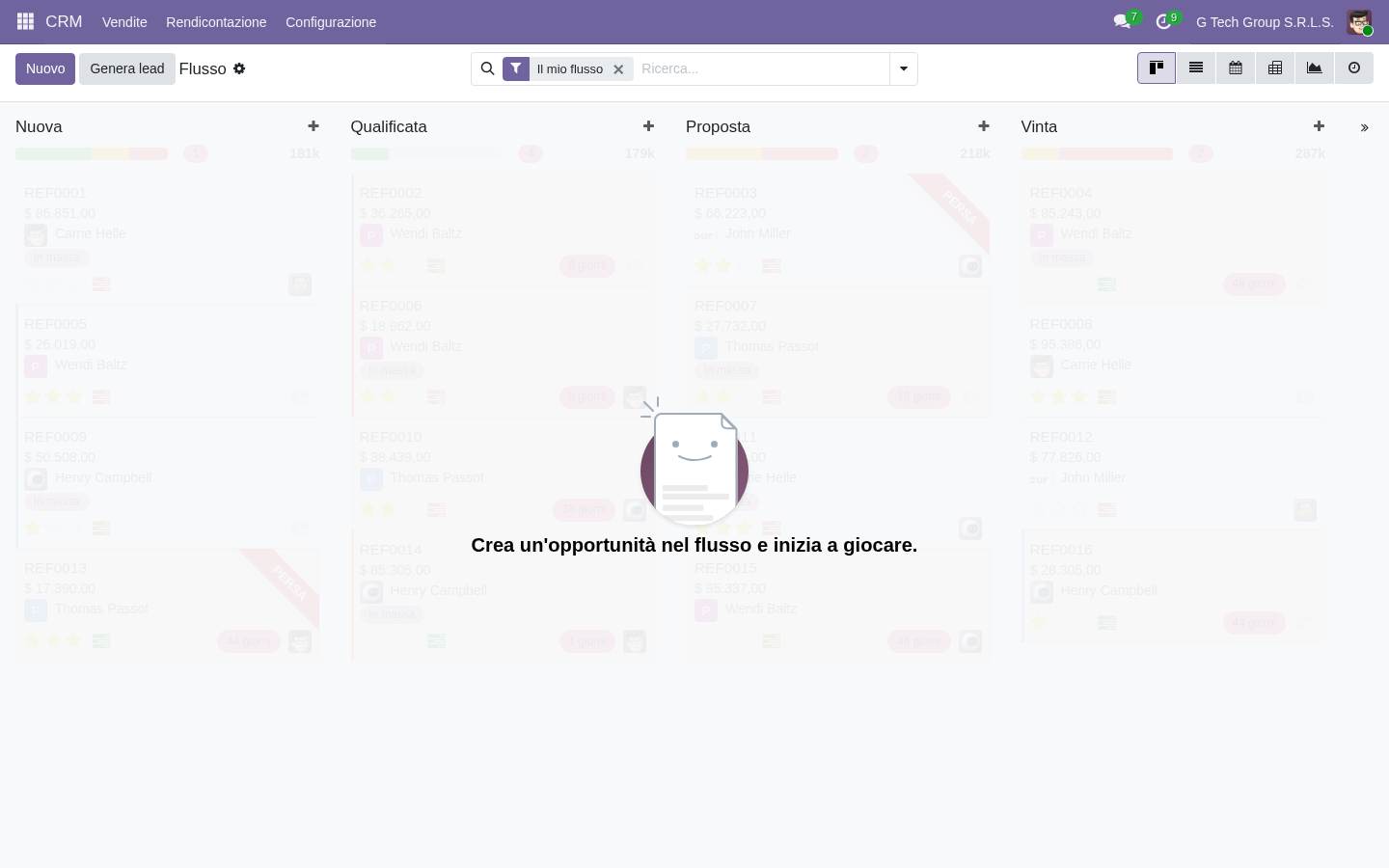
Un territorio è l’insieme di area geografica e segmento assegnato a un team. In Odoo si realizza con l’assegnazione basata su regole (Impostazioni CRM): per ogni team e venditore si definisce un dominio di filtro e i lead vengono assegnati manualmente su richiesta o a intervalli regolari. Niente sovrapposizioni, responsabilità chiare, passaggi ordinati quando un territorio cambia:
- Regola: paese e segmento del cliente → team
- Assegnazione automatica dei nuovi lead
- Eccezioni manuali (con approvazione da gestire come processo interno)
- Procedura di trasferimento documentata
- Storico conservato nel registro
- Report per territorio
Smistamento dei lead tra team
Un lead può rientrare in più criteri (ad esempio un cliente dell’area X interessato al prodotto Y): le regole devono stabilire quale team ha la precedenza, con domini che non si sovrappongono. Nei casi ambigui decide il responsabile. Così il coordinamento tra team resta fluido:
- Priorità tra le regole
- Di solito prima l’area geografica, poi il segmento
- Eccezioni basate sul punteggio del lead
- Procedura di trasferimento manuale
- Avvisi in caso di conflitto (con un’automazione)
- Campo per la collaborazione tra team
Esempio di albero decisionale
- Se il fatturato del cliente supera 1 milione di €: team Grandi clienti
- Altrimenti, se il paese è USA: team Americhe
- Altrimenti, se il paese è nell’UE: team Europa
- Altrimenti, se il prodotto è X: team Prodotto X
- In tutti gli altri casi: team Generale
Permessi e visibilità
Odoo prevede per le vendite tre livelli di accesso: “Utente: solo i propri documenti”, “Utente: tutti i documenti” e “Amministratore”. Limitare la visibilità al solo team di appartenenza richiede regole di accesso aggiuntive, configurate da un consulente. Il risultato è riservatezza tra team e una sana competizione interna:
- Utente, solo propri documenti: accesso alle proprie opportunità
- Utente, tutti i documenti: accesso a tutte le opportunità
- Amministratore: accesso completo e configurazione
- Visibilità per team: tramite regole di accesso personalizzate
- Riservatezza applicata dal sistema
- Storico delle modifiche nel registro di ogni record
Cruscotto KPI per team
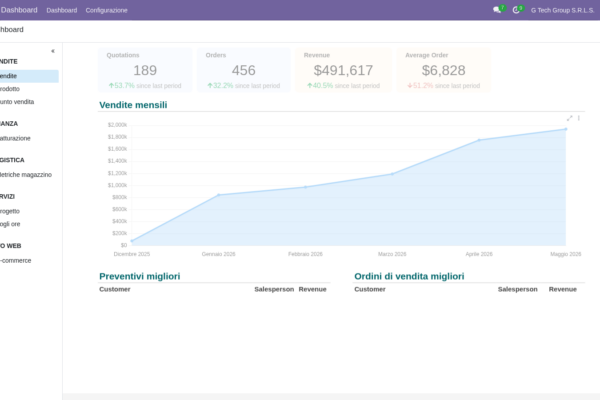
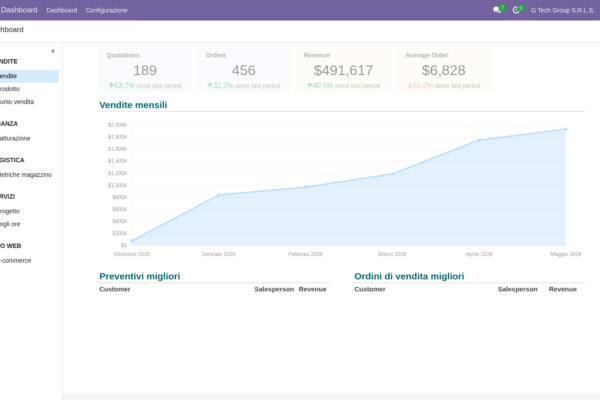
Ogni team ha il proprio cruscotto: pipeline, previsione, tasso di successo, volume di attività, raggiungimento dell’obiettivo. La direzione può confrontare i team tra loro, stimolando una competizione sana:
- Valore della pipeline del team
- Previsione rispetto all’obiettivo
- Andamento del tasso di successo
- Volume di attività per venditore
- Valore medio delle trattative del team
- Durata del ciclo del team
- Classifica tra team (es. con le sfide del modulo Gamification)
Strutture tipiche per PMI italiane
PMI piccola (5-15 venditori)
- Due team: contatti in entrata e in uscita
- Oppure: Italia ed Estero
- Struttura semplice
- Un unico responsabile
PMI media (15-50 venditori)
- 3-5 team per area o segmento
- Responsabili dedicati
- Team separato per la qualificazione dei lead
- Team Grandi clienti, se serve
PMI grande (oltre 50 venditori)
- 6-10 team su più assi (area, segmento, prodotto)
- Supervisione di una direzione commerciale
- Ruoli specializzati
- Comitato di coordinamento tra team
Collaborazione tra team
Regole sulla titolarità dei clienti
- Ogni cliente ha un solo team titolare
- Opportunità su più prodotti visibili ai team interessati
- Procedura di risoluzione dei conflitti
- Ripartizioni dei clienti documentate
Segnalazioni tra team
- Opportunità di vendita incrociata
- Accordo di ripartizione delle provvigioni
- Tracciamento della fonte della segnalazione
- Riconoscimento di chi segnala
Condivisione delle conoscenze
- Buone pratiche documentate e condivise
- Lezioni dalle trattative vinte e perse
- Schede di confronto con i concorrenti
- Comunità interna dei venditori
Incentivi per team
Assegnazione degli obiettivi
- Obiettivo complessivo di team
- Obiettivi individuali per venditore
- Pianificazione dal basso o dall’alto
- Adeguamenti per i nuovi venditori in fase di avvio
Struttura delle provvigioni
In Odoo 19 i piani provvigionali si gestiscono con l’app Provvigioni di vendita (Enterprise) oppure fuori dal sistema.
- Fisso più provvigione
- Incentivi a breve termine su prodotti da spingere
- Maggiorazioni oltre l’obiettivo
- Premio di team al raggiungimento dei risultati
Tutela del territorio
- Lead generato nel territorio → provvigione al venditore del territorio
- Ripartizione per le segnalazioni tra territori
- Procedura chiara per le contestazioni
- Revisione annuale dei territori
Piano di introduzione
Fase 1: progettazione (settimane 1-2)
- Criteri di segmentazione
- Bozza della struttura dei team
- Revisione con la direzione
- Contributi delle persone coinvolte
Fase 2: configurazione (settimane 3-4)
- Configurazione dei team in Odoo
- Regole di assegnazione
- Configurazione dei permessi
- Formazione di un team pilota
Fase 3: avvio (settimana 5)
- Comunicazione a tutta l’organizzazione
- Riassegnazione delle opportunità esistenti
- Sessioni di domande e risposte
- Monitoraggio ravvicinato
Fase 4: miglioramento (dal secondo mese)
- Raccolta dei riscontri
- Affinamento delle regole
- Messa a punto dei cruscotti
- Miglioramento dei processi
Errori comuni con più team
“Troppi team”
Problema: 20 team per 30 venditori, troppo lavoro di coordinamento.
Soluzione: 3-7 team al massimo per una PMI media.
“Nessuna regola di assegnazione”
Problema: ogni lead smistato a mano, con errori.
Soluzione: regole chiare e assegnazione automatica.
“Conflitti sulla titolarità”
Problema: due team rivendicano lo stesso cliente.
Soluzione: priorità tra le regole e decisione del responsabile.
“Nessun coordinamento”
Problema: team chiusi in compartimenti stagni, nessuna sinergia.
Soluzione: allineamento settimanale tra team e piattaforma condivisa.
“Nessun cruscotto KPI”
Problema: i risultati dei team non sono confrontabili.
Soluzione: un cruscotto per team e una classifica comune.
Esempi illustrativi per PMI italiane
Esempio 1 — Software in abbonamento: 4 team per area geografica
- Italia, Penisola iberica, area germanofona, Regno Unito
- Un responsabile dedicato per team
- Team di qualificazione dei lead comune a tutte le aree
- Obiettivo trimestrale per ciascun team
Esempio 2 — Manifattura: 3 team per segmento
- Piccole, medie e grandi aziende
- Cicli di vendita diversi per segmento
- Competenze specializzate
- Tasso di successo monitorato per segmento
Esempio 3 — Servizi: acquisizione e sviluppo dei clienti
- Team Nuovi clienti (acquisizione)
- Team Gestione clienti (sviluppo dei clienti esistenti)
- Passaggio di consegne chiaro
- Attenzione alla soddisfazione del cliente
Esempio 4 — Commercio elettronico B2B: 5 team misti
- Area geografica più linea di prodotto
- Regole di smistamento articolate
- Collaborazione stretta tra team
- Ricavi monitorati per team e per linea
Domande frequenti
Quanti team al massimo?
Per una PMI l’equilibrio è di solito 3-7 team. Oltre 10 il coordinamento pesa troppo. Va calibrato sulla dimensione complessiva e sulla complessità.
Posso cambiare la struttura dei team in seguito?
Sì. Le opportunità si riassegnano e lo storico resta nel registro. Conviene pianificare il cambiamento con cura (di solito 2-4 settimane).
Serve un responsabile a tempo pieno?
Per team oltre 6-8 venditori sì. Nei team piccoli il responsabile può anche vendere. In ogni caso il tempo dedicato all’affiancamento è fondamentale.
Si possono ripartire le provvigioni tra team?
Sì, se previsto dal piano provvigionale. Esempio: 80% a chi acquisisce, 20% a chi gestisce il cliente per le vendite incrociate. La regola va scritta nel piano degli incentivi.
Si possono consolidare i report di tutti i team?
Sì: la direzione dispone della sintesi complessiva e può scendere nel dettaglio del singolo team.
Prossimi passi
Nella prossima guida (12 di 15 della serie CRM) vedremo motivi di perdita e analisi delle vendite: motivi di perdita strutturati, interviste sulle trattative vinte e perse, piani d’azione per gli schemi ricorrenti e affiancamento dei venditori basato sui dati.
Vuoi organizzare la tua forza vendita su più team?
I consulenti certificati Odoo di BrentaSoft aiutano le PMI a progettare l’organizzazione commerciale nel CRM Odoo: segmentazione, regole di assegnazione, permessi, cruscotti KPI e accompagnamento al cambiamento.
Prenota una call conoscitiva oppure prova la nostra demo Odoo 19 online. Oppure prova Odoo direttamente su odoo.com (link referral BrentaSoft).
Vuoi una soluzione su misura per la tua azienda?
Brentasoft sviluppa gestionali, CRM e software personalizzati per PMI italiane. Parliamo del tuo progetto.